
.
Making your own decisions about organ donation
Have you spoken to your family about organ donation? Whether that's sharing your own decision with loved ones or helping the next generation understand the choices available to them, it’s important to have open and honest conversations.
Each year, thousands of lives are improved and saved thanks to those who donate organs to patients on the transplant list. It takes two minutes to register to be an organ donor, and that decision could save nine lives.
You might also like...
The facts
The latest figures from NHS Blood and Transplant show that in 2025/26 there were 1,428 deceased organ donors and 1,017 living donors. During the same period, 4,666 patients received life-saving or life-enhancing transplants.
As of September 2026, more than 8,700 people are waiting for a transplant across the UK, including more than 200 children. Nine people die every week while waiting for a suitable organ, highlighting the urgent need for more donors and family conversations about donation
Organ Donation Week 2026
In line with Organ Donation Week (21 September to 27 September 2026), L&G has partnered with NHS Blood and Transplant to inspire family conversations and encourage registrations for organ donation. This year's campaign comes at a critical time, with more than 8,700 people currently waiting for a transplant and donor numbers declining across the UK.
This year marks 32 years since the NHS Organ Donation Register was established. And as we look ahead, it’s just as important as ever that people feel confident talking about their organ donation decisions.
Register your decision
It’s important to encourage conversations around organ donation at home. By doing so, we can make sure family members are aware of each other’s wishes and decisions are registered with the NHS. This is particularly important as NHS Blood and Transplant reports that family consent for organ donation has fallen by almost a fifth in the last five years, meaning opportunities to save lives are being missed. Before the law changed, even though 80% of the public said they supported organ donation, only 38% had opted in, with the majority simply not having got around to registering. This may have resulted in numerous opportunities to donate being missed.
28.7 million people in the UK have confirmed their decision to become donors through the NHS Organ Donor Register, helping NHS Blood and Transplant move towards its goal of having 30 million registered donors by the end of the year.
Although 28.7 million people have registered their decision, NHS Blood and Transplant is currently facing one of its most challenging periods for organ donation in more than a decade, with donor numbers down 9% year-on-year. It remains as important as ever to take two minutes to record your decision on the NHS Organ Donor Register. You can also check, register, or update your decision via the NHS App.
Family consent for organ donation has fallen from 69% in 2020/21 to 57% in 2025/26, a decline of almost a fifth in five years. NHS Blood and Transplant estimates that more than 700 potential donations have been lost because families were uncertain of their loved one's wishes, contributing to 2,127 missed transplant opportunities.
Some families still overrule the wishes of relatives who had chosen to become donors. This highlights the importance of open conversations, ensuring people feel confident to share and discuss their organ donation decisions with their family.
Whatever your own decision about organ donation, it’s vital that you talk to your loved ones so they can fully understand the decision and be certain about what you want.
So, what do you need to know about organ donation? How do you start a conversation about it and debunk some common myths? And what should you do once you've made up your mind? Let’s take a look.
Family involvement
England, Wales, Scotland and Northern Ireland all now have an opt-out system for organ donation. This means that adults are considered willing organ donors when they die unless they have recorded a decision not to donate or are in an excluded group. However, families will always be consulted before any organ donation goes ahead.
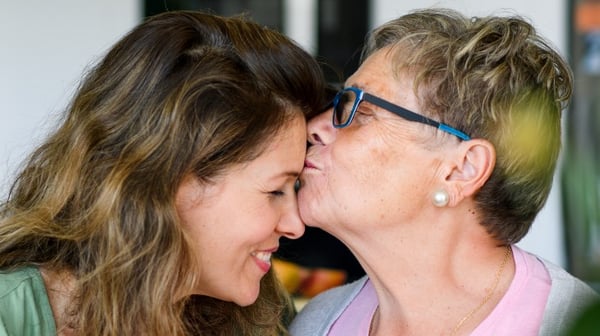
Therefore, it’s as important as ever to ensure your family know your organ donation decision. Many families support donation when they know what their loved one wanted, but uncertainty around wishes continues to prevent hundreds of potential donations every year.
Learning about donation

There are lots of opportunities to learn about organ donation at different stages in life. Blood, organ, and stem cell donation are now a statutory subject for Key Stage 3 and 4 in state secondary schools, as part of health education.
Additionally, when learner drivers apply for their driving licence, they will be asked if they want to opt in for organ donation. So this is an important time for learners to understand the facts around donation and what their options are when it comes to donating organs.
We can all benefit from educating ourselves about organ donation and having open conversations with loved ones. That way, we can make our decisions about whether to donate organs with confidence.
It's hard to know where to begin a conversation like this with our children – the thought of talking about death can feel emotional and difficult to articulate. But having conversations that are collaborative, supportive, and understanding of everyone’s point of view will go a long way in opening up communication.
If you’re looking for some inspiration on talking to young people about how organ donation works, here are some resources created by NHS Blood and Transplant’s charity partners:
- Orgamites – a free organ donation and health education programme for 5-11-year-olds.
- Team Margot Foundation – explainer videos and teacher resources to inspire 5-11-year-olds about the importance of giving, including organ donations.
- Anthony Nolan – the charity offers resources for giving presentations to 16-18-year-olds on why organ donations matter.
If you’re still struggling with how to talk about organ donations with children, you could explain how rewarding it is to be able to sustain (and improve) a life. After all, isn’t it remarkable that we’re able to donate organs after death, and while we’re alive? You could even start by talking about your own feelings about organ donating.
Tips for having difficult conversations with your children
Legal & General partnered with Clinical Psychologist Dr Angharad Rudkin, to explore useful tips for having difficult conversations like this with your children:
- Age – how long a child can focus on a conversation changes with age. The basic rule of thumb is one minute per year of their life. This may seem very short but knowing this helps a parent focus the conversation and optimises their child’s chance of taking it all in. Age also affects how a child understands concepts of time and the finality of some things. With younger children especially, ask them what their understanding is before you begin so that you can tailor the way you give information.
- Technology – Children often look online to find out more or to verify information they’ve been told. While encouraging your child to come to you to chat, you can also direct them to trusted online sources.
- Language – the younger the child the simpler the language. Don’t assume your child knows what things mean. Instead ask them if they understand what an “organ” is, and what the word “donation” means.
- Use examples – children can struggle to understand abstract notions until they are quite a bit older, so use examples from your child’s life (either a personal experience or something from a book, TV, or a game) to illustrate what you are talking about.
- Honesty – Respond to questions openly and honestly and don’t be worried if you can’t answer a question. Let your child know you will find out and come back to them or let them know that you haven’t quite figured out the answer to that yet either. They will appreciate your honesty and will respond similarly.
- Timing – Choose a moment when children aren’t too tired and hungry and when you’re not taking them away from something they enjoy – whether it’s reading, gaming or playing outside. This means they are more amenable to listening.
- Sensitivity – Keep checking in with how they’re feeling. If a child is feeling very anxious, arrange with them a time when you will return to the topic, so that they know there is another opportunity to talk.
- Busy Families – Families are busier than ever, and it can be hard to find the time to talk about big, important topics such as organ donation. But it is a conversation worth having, not least because children learn as much from watching as they do from listening. Hearing you talk about it calmly and openly will teach them how to respond to this topic, opening up the gates to plenty more conversations about it in the future.
- New knowledge - Children of all ages are fascinated by novelty and surprise. Talking about organ donation may spark questions. Encourage all questions to help a child build up a better understanding of a complex topic.
- After the conversation – After the conversation move on to an activity together. This will ease the transition back to everyday life and reassure the child that life will now go on as usual.
Dr Rudkin also highlighted the importance of considering your child's sensitivities and cut-off points. To have an effective conversation and avoid any negative responses. She says:
“Just because you (as a parent) want to talk about something, it doesn’t necessarily mean your child wants to. Children love to talk about things related to their world and passions that interest them. Talking about adult topics can sometimes feel to children like a lecture.
“Different children have different sensitivities and cut-off points. Some may be able to sit and absorb complex information for a long time. While others may need to take it in bit by bit. Use your knowledge of your child to plan your conversation. If you have children of different ages, try having the first conversation separately so that you can tailor it to their developmental stage and needs. Then you can have a family chat where you can all share and learn about one another’s perspective.”
Ashleigh's story
One person who knows how vital it is for families to support their loved one's decision is 26-year-old Ashleigh Tucker from Coventry. She received a heart transplant earlier this year due to Hypertrophic cardiomyopathy – a thickening of the heart muscle. The transplant wouldn’t have been possible without her donor's family supporting their decision to give life to another.
"I had pneumonia when I was 10 months old and the virus attacked my heart which resulted in a dilated cardiomyopathy," said Ashleigh.
"It wasn't until I was 15, that the consultant at Birmingham Children's Hospital said it was hypertrophic – which means my heart muscle was becoming thicker. I was listed when I was little for a transplant at Great Ormond Street, but I got better and was taken off the list as they didn’t think it would benefit me at that time.”
Once Ashleigh was an adult, she was transferred to a different team at the University Hospital Coventry and Warwickshire, and they put her on new medication. She was stable for a while, but during COVID times everything felt harder. Ashleigh was constantly breathless, exhausted, and things started getting worse. She continues:
"In November 2021, I ended up in hospital with bronchitis. They did an echocardiogram and found I was in heart failure. Hearing those words changes everything. The last few years were up and down. Some days just getting out of bed left me gasping. I tried rehab and new meds. I was in and out of hospital with chest pain and suspected myocarditis. It felt like every time I tried to get back on my feet; something knocked me back down."
Ashleigh was then referred to Queen Elizabeth Hospital in Birmingham where she was assessed and listed for transplant last summer and spent nine months waiting, not knowing when the call would come.
"I’d just come out of hospital after eight days and barely been home a week when the call came. It was a massive shock - QE had told me nothing was changing, so I wasn't expecting anything at all. So, I was in shock when I got the call, she said.
"A heart had come in for someone on the super‑urgent list, but they were too sick for surgery. Because it was fast‑track, they needed someone close by, and they thought I was a match. I went completely blank. I was working from home, my mum was too, and I just pointed at my phone and then at my chest. I couldn't speak. I was shaking. It didn't feel real.
"Around half 7 they took me down for my transplant. Even then, they couldn’t be certain until I was asleep that it would be viable and would go ahead as they needed to do extra checks. And because I'd had a defib fitted when I was 18, they told me the surgery would take longer."
Ashleigh's transplant went ahead and was successful. Now a few months down the line she is still in slow recovery. She still gets tired and her muscles are still weak, but she is soon to be starting cardiac rehab which will help with her recovery – none of which would have been possible without her donor family saying 'yes' to donation.
"I don't think there are enough words for what donation really means to us as a family. It's a crazy situation - the hardest thing a family will ever face - and somehow it still becomes a lifeline for someone else. Thank you just doesn't seem enough.
"You can't imagine losing someone you love. But maybe there's a tiny bit of comfort in knowing that, through their gift, they've helped people keep living."
Other related articles