
The hidden cost economy
27 August 2026 - by Rebecca Brace
In all our lives, some costs are unavoidable – from putting a roof over our heads to putting food on the table. But there’s more to life than the basics, so how do we budget for those creature comforts and nice-to-haves?
We polled 2,000 UK adults to discover whether they’re splashing the cash without even realising it.
Our research discovered:

- More than a quarter (27%) of people said they simply ‘forgot to cancel’ a subscription or membership they’ve continued to pay for. 23% didn’t realise they were still paying for it.
- Residents in Belfast were the most likely (55%) of any city to mention cost of living pressures as a household priority.
- On average, UK adults check their regular payments (like bills, subscriptions and direct debits) 3.83 times a month. This was highest in Wales (6.14 times a month).
- Despite the risk of surprises, more than four in ten (41%) respondents said they don’t have a financial protection policy in place.
Money down the drain
As well as those unexpected creeping costs, the public told us about their challenges with avoidable spending.
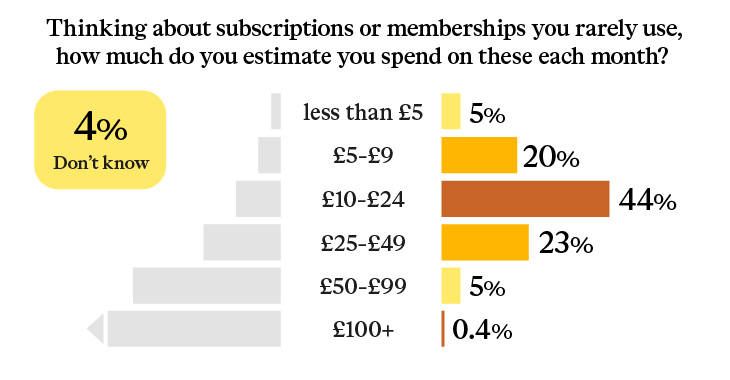
Younger millennials (aged 25-34) had the highest average spend – £23.53 – for subscriptions and memberships they rarely use.
And digging a little deeper, we found that many people simply forget to turn off the spending tap. We asked respondents why they keep paying for services they no longer use:
- 27% of people told us they forgot to cancel.
- 23% didn’t realise they were still paying
- 18% said they couldn’t easily cancel.
Counting the cost
Staying on top of our hidden expenditure is important at the best of times, but especially so during a cost of living crisis. And it’s no surprise that financial pressures are a priority for many of those we polled.
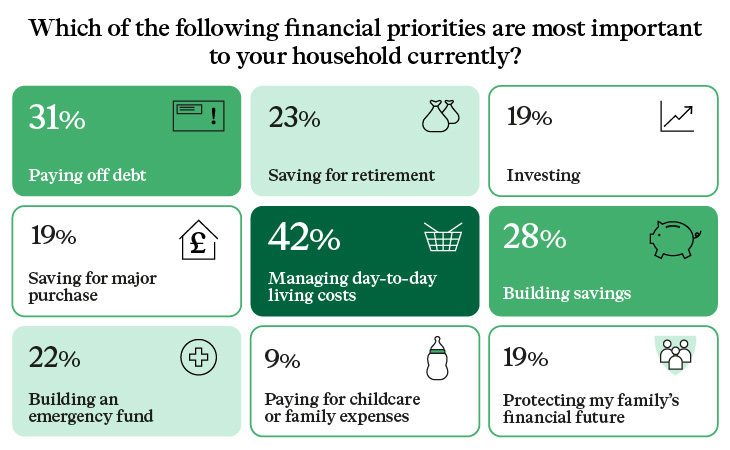
People in Belfast were the most likely (55%) of any city to mention cost of living pressures as a priority. And when we broke down the data by housing type, those in flats (47%) were the most cost of living conscious.
Moreover, Sheffield had the highest percentage (18%) of people who said unexpected costs were a ‘significant’ stress in their household. Little over a fifth (22%) of people overall said they were ‘not at all’ stressed by hidden everyday costs.
Costs we don't consider
From broadband bills to the monthly mortgage or rent, our regular spending habits are often predictable. But when it comes to one-off treats, that bank statement doesn’t always make for pleasant reading!
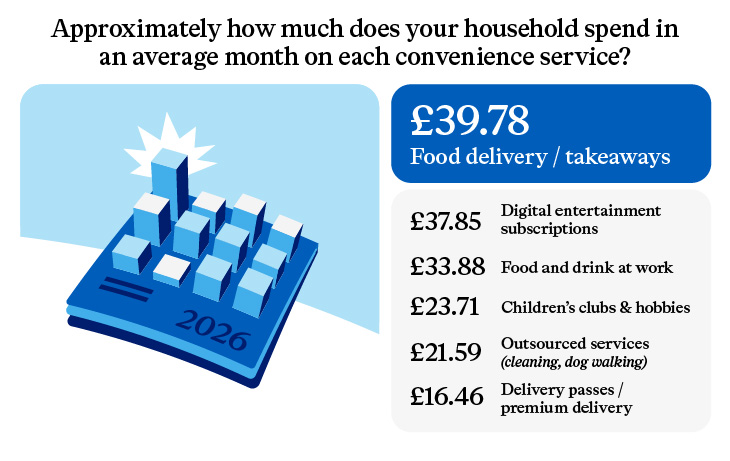
Regionally, Greater London was the capital of takeaway spend – £53.63 a month on average. Meanwhile, men were more likely to fork out on food than women – £43.08 a month versus £36.71.
But while we’re enjoying ourselves, a lot of these costs can catch us out.
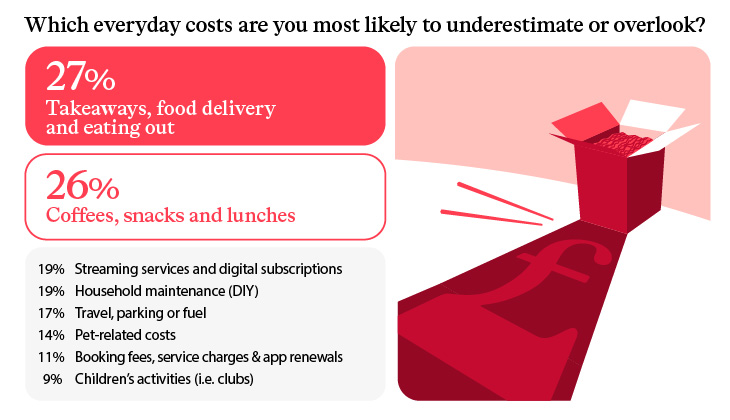
Across the generations, we have different perceptions of these hidden costs. 18-24-year-olds were the most likely age group to underestimate the cost of takeaways, food deliveries and eating out (36%), compared to 20% of those aged over 55.
In contrast to Gen Z, Baby Boomers (aged 55-plus) were likeliest to cite household DIY (22%) as the biggest cost they have overlooked.
Staying in control
Of course, financial worries are totally understandable, especially for those balancing the competing pressures of work and family life. But when it comes to hidden costs, there are some ways you can perform heroics.
42% of respondents told us they regularly review (and use) the subscriptions, memberships and recurring services they pay for. But there was an age gap; almost one in two (48%) people aged 45-54 said they regularly check these outgoings, compared to 28% of 18-24-year-olds.
In fact, we asked the public how often they check regular expenditure like bills, subscriptions, direct debits and standing orders.
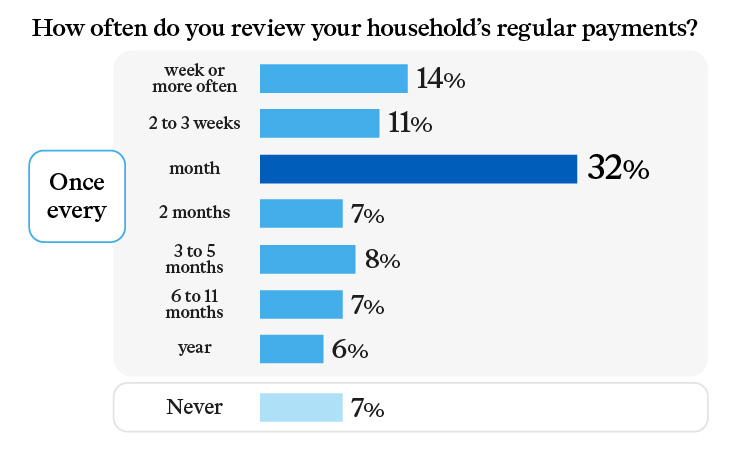
On average, people told us they review their regular payments 3.83 times a month. But there were differences in terms of age, gender and geography.
- People aged over 55 monitor their regular payments closely – 4.32 times per month on average. In contrast, older millennials (aged 35-44) tend to check just 3.26 times a month.
- Women check their ongoing payments 4.25 times a month; among men, it was 3.38 times.
- Across the UK, Wales led the way with the highest volume of regular payment checkers – 6.14 times a month. Almost a quarter (24%) of people in Wales monitor this expenditure weekly (or more frequently).
Certainty is better than a surprise
While staying on top of our finances can help control hidden costs, there are lots of other ways to enjoy some extra peace of mind.
When asked which protection policies they had in place, life insurance was the most common, held by 32% of respondents. This was followed by decreasing life insurance (15%), critical illness cover (12%) and income protection (10%).
More than four in ten respondents said they have no financial protection in place, and the most common reason was ‘I don’t think I need it’ (28%). Males were more likely than females (33% versus 23%) to say they didn’t need life insurance.
In our guide to who needs life insurance, we cover how life insurance isn’t just for homeowners or married couples, but anyone with financial dependants.
Protection makes perfect
Sometimes, the real cost is to do nothing. Whatever your priorities, you can protect your loved ones and their future with L&G Life Insurance from just £5 a month.
Related articles