What is a codicil?
When you prepare to leave your assets to your loved ones, you may encounter the word ‘codicil’, meaning an additional legal document that explains or alters your will. But when, why and how should you use a codicil?
Here’s everything you need to know about adding a codicil to a will.

Find out more about Life cover
Pros and cons of adding a codicil to a will
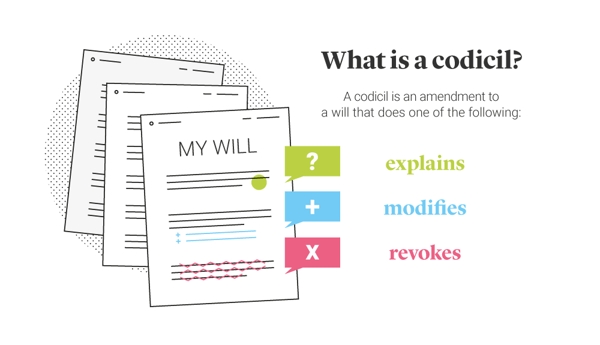
A codicil to a will is a short legal document that explains, modifies, or revokes part of an existing will without replacing it. It's a quick lower-cost way to make minor changes, but it can create risks if not stored or drafted correctly. Codicils are preferred for small, clear amendments; for significant changes, execute a new will to avoid ambiguity and legal challenge.
Pros
Cons
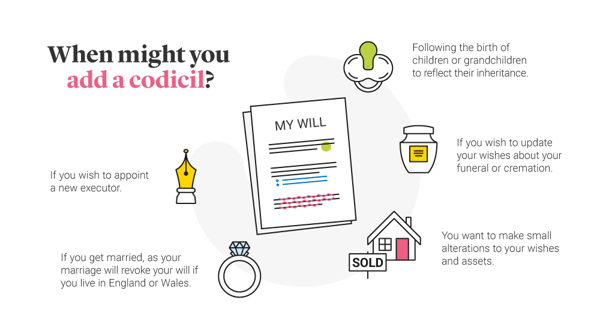
Yes, you should review your will after any major life event. It's also recommended you review it every five years to make sure it still reflects your wishes especially as your circumstances may change. Changing your will might seem like something you’d rather avoid, but there are good reasons for adding a codicil:
- If a named executor has died, and you wish to appoint a new executor.
- If you get married, as your marriage will revoke your will if you live in England or Wales, although not Scotland.
- You want to make small alterations to your wishes and assets; for example, because your financial circumstances have changed.
- You wish to change your will following the birth of children or grandchildren to reflect their inheritance .
- If you wish to update your wishes about your funeral or cremation.
- You get divorced. Getting divorced doesn’t revoke a will, however your ex-husband/wife or civil partner wouldn’t benefit from it.
How to change your will
If you need to amend your will, adding a codicil to a will is a common option for small, clear changes; for major revisions (property transfers, primary beneficiaries, complex trusts) a new will is usually safer. You can get help in two main ways:
- Solicitor - best for complex estates, property changes or bespoke drafting; reducing the risk of ambiguity and disputes.
- Online will writing - cost-effective and convenient; many offer a self-service drafting with optional legal review and telephone support, and some allow unlimited updates to your will for a fixed price.
If you choose to add a codicil, your executors will need to be made aware that the codicil exists. Your codicil must be signed and witnessed by two people in the same way as your will, though you don’t need to use the same witnesses for both documents.
Writing a new will
If you wish to make significant or multiple changes to your will, a better alternative to a codicil might be to write a new will from scratch. In doing so, you should destroy your old will and any copies to avoid confusing your executors.
Regardless of whether you choose to write the will online or through a high street solicitor, you should ensure the new will clearly revokes any previous versions and codicils. It should also preserve the validity of any other legal documents in your name, such as assets protected by another will.
In short, adding a codicil to a will is a simple and effective way to make small alterations to your will while you’re still around.
Find out more about our life insurance

More articles and guides

The importance of writing a will

Can a will be changed after death?

What are the duties of the executor of a will?

Estate planning