
L&G campaigns Paula's supported

Financial health check for divorce
Listen to Paula's podcast episode
Announcer: This series is brought to you by L&G, helping you build a future that's a little bit richer.
Iona: Hello, I'm Iona Bain and welcome along to A Little Bit Richer, brought to you by Legal & General. Today we're touching on workplace pensions, and that's because they've been in the news recently. There's some changes coming down the track, including where some of your money is invested and what happens to those small pots you build up as you move between jobs.
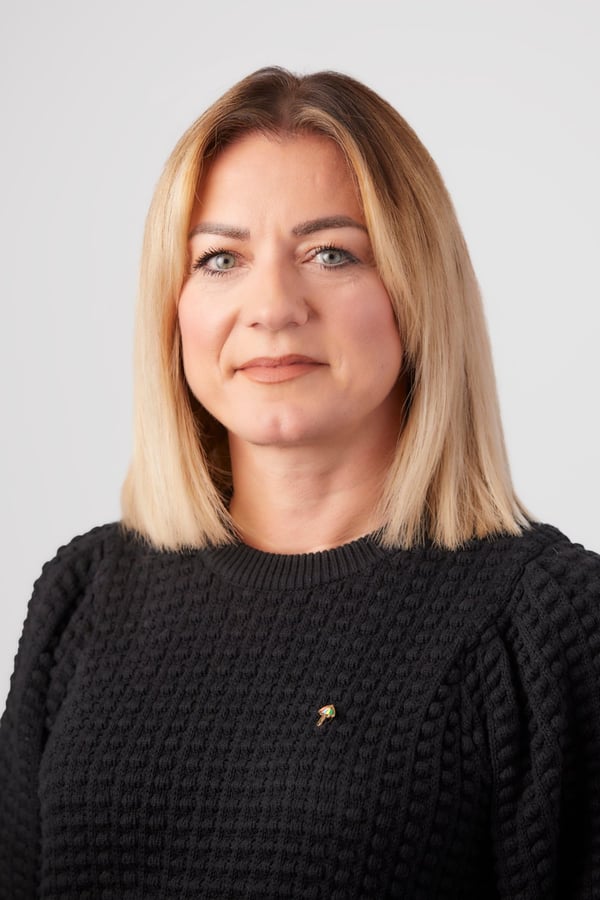
So we wanted to bring in an expert from L&G as they are the largest provider of defined contribution and workplace pension savings in the UK. Paula Llewellyn heads up the team there, so she is very well-placed to outline what's in the pipeline, why it's important for your future.
Welcome Paula.
Paula: Thank you.
Iona: So Paula, there are some changes happening to workplace pensions that people might have been hearing about recently. Can you tell us a little bit more about what they are?
Paula: Yeah, so look, pensions are really important for the standard of living that people need to have in their retirement, and that's why the government really takes a lead on all things pension to make sure that people are getting the best outcome that they want. So they're introducing some new rules as part of a review that they've done.
Iona: So what the specific changes that the government's bringing in?
Paula: So they're bringing in some new rules, which really means that it's going to drive better outcomes for the longer term for pension savers. But these things are not going to happen overnight. They're going to take a number of years to roll through. So nothing immediately is changing, but will definitely see something over the next few years.
Iona: Interesting. And in particular, changes are happening to small workplace pensions. Can you talk us through those? Because an issue that affects a lot of people, isn't it?
Paula: It is, yeah, absolutely. And research has shown that people have on average 11 jobs over their lifetime. And so as they move employer, they're building up these small pots. And so what the new rules are going to do is bring in the ability for people to combine these small pots under a thousand pound. And that's got loads of advantages.
Number one, it makes it really easy for people to manage, but also by combining these pots, you're reducing the administration costs and potentially you'll see bigger growth of your retirement savings over time.
Iona: That all sounds really good. I think people will be wondering, " Do I have a small pension pot?" And maybe they do thanks to something called auto enrolment. Could you just quickly explain what that is and why it creates these small pension pots?
Paula: Auto enrolment basically means that if you are 22 or over and earn over 10,000 pounds, you will automatically be enrolled into your employer's pension scheme. So if you look at how that's made up, there's normally 8% of your salary which is invested into that pension scheme. 5% of that comes from your salary, so 4% from your contribution and 1% as tax relief from the government. And then the 3% then comes from your employer.
Iona: So that means that people are contributing to a workplace pension, but then when they move on from that job, the pension pot doesn't go with them. And that's why you can end up building up all these wee pension pots and all sorts of places that you might forget about.
Paula: That's right.
Iona: That sounds like it could be a huge problem.
Paula: Yes, and that's exactly why the government is looking at this now to really make it easier for pension savers to manage their pensions. And I think paying attention to your pension is really important, particularly because there's lots of things that you need to be thinking about, what your contributions are, how your investment is growing over time, etc.
And lots of companies make it easier now for people to do that, whether that's online or through their app. We've got a rate app at L&G that allows our pension savers to be able to really get involved and track what's happening in their pension.
Iona: That's such a simple win, isn't it? To just check out your pension providers app, and maybe people don't realize that that is something that they can do.
Paula: Yeah, 100%.
Iona: There's been a debate around whether our pensions could be used to try and kick- start economic growth. Could you talk us through how that might affect pension savers?
Paula: Yeah, absolutely. So people that manage pensions are focused on getting really strong growth for their customers and to help do this, they invest in companies in the UK as well as globally. So in the changes that the government have announced, they're keen to see more money from workplace pensions being invested in the UK to help support the UK's economy and growth.
So in May, there was something called the Mansion House Accord that really looked at some of these changes in the types of areas the pension fund managers like Legal & General can invest in. And so pension companies have committed to invest at least 10% of the money from some of their pension funds into what's called private markets. So this covers companies that are not listed on the stock exchange.
So some of the largest and best- known companies in the world are privately owned, and those are household names like Aldi and Mars as an example. It also covers investment into big building projects.
So all of that has the aim of boosting the UK economy through creating more jobs, growing more businesses, and ultimately, helping people grow their retirement savings.
Iona: And there are all sorts of checks and balances like trustees for example, that really make sure that the pension funds are being invested well on behalf of savers.
Paula: 100%. Yeah. And that's again, their duty to make sure that the outcomes that we're driving for pension savers are the best that they could be.
Iona: People might listen to that and think, well, that sounds nice, but I do also want to make sure that my pension is going to be there for me and is going to get me the growth that I need so that I can have the nice retirement that I deserve. So what balance is being struck between making sure that that money is being invested productively and making sure also that people get a good return?
Paula: This Mansion House Accord, how's the call, just helps to give a direction of travel, I guess, in terms of balancing what we're doing with pension savings as well as investing in the economy. So yeah, it's something that pension companies like Legal & General are really focused on, but ultimately driving that outcome for pension savers is the most important thing.
We've seen some of these examples in other countries like Australia as an example, where similar schemes really invest heavily into these private markets and Australian businesses much more than in the UK. So there is sort of a precedent already in the markets of how to do this, and that's what the UK is looking to do.
Iona: All this sounds really positive, but is there more that could be done to help pension savers? And if so, what could and should change?
Paula: Let's stop where we've been from a pensions landscape. So over the last 10 years, there's been significant changes in retirement. So in the past, many pension providers would've paid a guaranteed income in retirement, and that would've been based on your salary and the number of years that you worked for that employer. These pensions generally gave people a relatively comfortable standard of living in retirement. But things have changed, as I said over the last decade.
And nowadays, pension schemes off through employers don't really give the guaranteed amount when you retire. So it's really dependent on how much you put into your pot and how much those investments grow over time. So this means that we all need to take much more ownership of our pensions to make sure that we have a really good standard of living in retirement. So people do need to start thinking about saving more during their working life, and that is something that obviously will help them to have a much more comfortable retirement.
If we just think about what that means for people in their 20s and 30s, if you're putting money into your pension or not putting money into your pension, probably because it's not high on the priority list, there's lots of other things that are taking the demands of what you're earning. And so yeah, lots of financial pressures mean that people are probably not investing into their pension at an earlier age.
I saw some concerning stats recently that we've done that said 12% of 18 to 44 year olds don't have any money saved for when they retire. While I think it was 36% don't know what their monthly contributions are. So all of that means that I guess we need to start thinking about investing in our pensions much earlier. So I mentioned auto enrolment earlier, that is a way of helping people who are 22 or over to start to invest in their pension.
And while that's good, it's not enough, we believe that it's probably not enough to give a comfortable standard of living because it is the minimum amount. The 8% that I talked about is the minimum amount. So I think that's something that we need to consider. And there's also the fact that employees who are not 22 or don't earn 10, 000 pounds a year aren't automatically included in the company pension. So that could disadvantage them in the longer term. So I think auto enrolment should absolutely be broadened out to include every employee.
I think that's the first thing. Second, I would say the automatic consolidation of small pots. We've just talked about some of the changes coming in for pots under a thousand, but small pots above a thousand also benefit from better growth in the long term if we combine those with other pension savings. So there's more focus on this by the government and the industry actually, and more changes are in the pipeline in this area, which is really good to see.
And then I think finally the Pensions Dashboard, which is something which is going to be introduced quite shortly. There's lots of work happening where companies are looking all to connect into a single source of information so everyone can go on, log onto the dashboard and get a clear view of where your pensions are, who you're invested with, and then take the necessary action to potentially consolidate those small pots themselves or just to keep a track of what's happening in their pensions so they're more aware of some of the decisions that they could be making.
Iona: I do like the sound of the Pensions Dashboard because it reminds me of Star Trek and kind of navigating my pensions out in space, but that's coming down the track, but it's not with us just yet.
Paula: It's not here yet. There's lots of work happening within the industry at the moment to get ready for this. So yeah, everyone is sort of working towards that.
Iona: Watch this space.
Paula: Exactly.
Iona: In the meantime, whilst we wait maybe for some of those changes to happen at some point, who knows, what can we do to try to be in a stronger position when it comes to our retirement? Have you got three tips for us, Paula?
Paula: I have, yeah. So I would say the first thing is save as much as you can as early as you can. Your future self will absolutely thank you for this. And really, I think there's a few things that you could do to make that happen. I think first of all, look at your employer contributions and the tax benefits available to you. They're in place and encouraged to help you to start saving as soon as you can.
And also, if you get a pay rise, you can increase your percentage of your salary potentially that's going into your pot. Even just upping your contribution by 1% of your salary can vastly impact your future savings growth in your retirement. And you can also potentially look at investing. If you get a bonus, can you invest some of that as well into your pension? So start early and invest as much as you can.
Secondly, pay more attention to your pension, find out how much you contributed, where your investment is, how much they've grown, look at the small parts, really get an understanding and start to think about the things that you could do today to really start to put yourself in a better position as you go into retirement. And then I think thirdly, if you're considering moving jobs, have a look at what the pension scheme looks like. Have a look at what the benefits are that that employer's offering.
Some organizations make more generous contributions into your pension, so rather than the minimum that I talked about earlier, some can go much higher than that. So I think having a look at what those benefits are could really benefit you over the longer term. And also, if you do move jobs, you can usually move your old employer pension with you. Again, that keeps everything nice and simple for you, keeps everything in one place, but also gives you the opportunity to really grow that investment over time.
Iona: That's really good to know. And yeah, I think you're right. We need to make it normal for us to look at an employer's pension arrangements just as much as we might consider, whether they offer free donuts on a Friday or a nice gym membership. The pension matters just as much, if not more in the long run.
Paula: It does, in the long run, it absolutely does. Yeah.
Iona: Thanks so much, Paula. It's clear small actions today can really make a difference further down the line. Next time, financial strategist and founder of Mind Over Money, Krystle McGilvery will be here to discuss how being neurodiverse might affect how you manage your finances. If this episode has made you think about your pension in a new way, great, why not share the podcast and help others get a little bit richer too? This podcast is brought to you by L&G. You can keep up with the show on YouTube, TikTok and Instagram @Legal & General. Until next time, see you soon.