
How to manage stress
The modern world often moves at a million miles-per-hour, and if you’re experiencing stress symptoms – you’re definitely not alone. According to Mental Health UK’s Burnout Report 2026 – with data from YouGov – 91% of adults in Britain say they’ve experienced high or extreme levels of pressure or stress in the past year.
But what is stress, how does it affect the body, and does stress affect your life insurance in any way? We’ll explore all that and more in this guide.

You might also be interested in...
Stress is the way your body reacts to a challenging situation, such as feeling pressured or threatened. Some people might refer to this as ‘burnout’. We can all feel stressed at different times in our lives, so knowing how to manage stress can help you ride out these difficult moments.
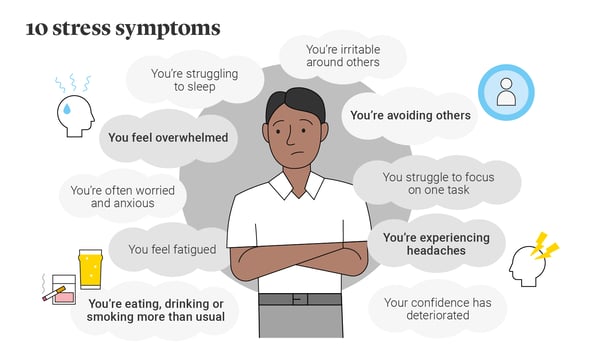
Everyone experiences stress differently, and stress symptoms can manifest in any number of ways. Here are 10 signs of stress that you may want to look out for:
- You feel overwhelmed
- You're irritable around others
- You're often worried and anxious
- Your confidence has deteriorated
- You struggle to focus on one task
- You feel fatigued
- You're struggling to sleep
- You're eating, drinking or smoking more than usual
- You're avoiding others
- You're experiencing headaches
There is no straightforward answer that can explain why you may be feeling stressed, but here are some possible reasons why.
- Money worries, from repaying debt to keeping up with the cost of living.
- Health problems that cause anxiety or affect your quality of life.
- Work-related stress.
- Loneliness and isolation from other people.
- Relationship struggles with either family, friends or partners.
- Major life events like a bereavement, changes in our personal lives, having a baby or moving home.
We know that regular physical activity can reduce your risk of illnesses like colon cancer, heart disease and strokes, so keeping fit is an important tool in your stress management armoury.
Stress does not directly affect your life insurance policy. However, some of the consequences of stress — such as high blood pressure or a decline in mental health — can influence the price you pay when you apply. This is because insurers take your overall health, lifestyle and medical history into account when calculating your premiums.
Many people successfully obtain life insurance while experiencing stress, but it’s important to be open and accurate when answering health questions on your application. Providing false or incomplete information could lead to a reduced payout — or even invalidate a claim altogether.
In some situations, insurers may look at additional details linked to your mental health to better understand your overall risk. These can include:
- A history of admission to hospital, home treatment or support from crisis teams
- Previous suicide attempts or suicidal thoughts
- Receiving benefits or being medically retired due to mental health
- Having six months or more off work in the last year for mental health related reasons
- Answering ‘Yes’ to risk taking behaviour questions on the application (which may require a pre health review first)
These factors don’t automatically stop you getting cover — they simply help insurers offer terms that reflect your individual circumstances.
Chronic and severe stress can lead to high blood pressure, which over the long-term, can increase your risk of developing heart disease and other illnesses.
The cost of life insurance takes account of your age and health. If you’re more likely to die compared to someone who is the same age but in better health, it will cost you more. So accordingly, stress-related symptoms like high blood pressure can affect the cost of your life insurance when you apply.
Fortunately, while stress can cause an increase in blood pressure, this can return to normal levels once the stress has subsided.
No - once your life insurance policy is in place, experiencing stress or developing stress‑related symptoms later on will not affect your cover or the cost of your premiums. UK life insurance policies are underwritten at the point of application, so any changes to your health after your policy starts don’t alter your level of protection.
Ways to manage stress
Learning how to manage your stress could alleviate tension and leave you feeling happier and healthier. Below are some pointers on ways to manage stress.
Want to learn more about Life Insurance?

Related articles

Are the pressures of life changing?

How to find a babysitter and never miss another date night

Parenting Tips To Help Your Baby Sleep

Working from home with kids